

Seen and Unseen
The landscape of change

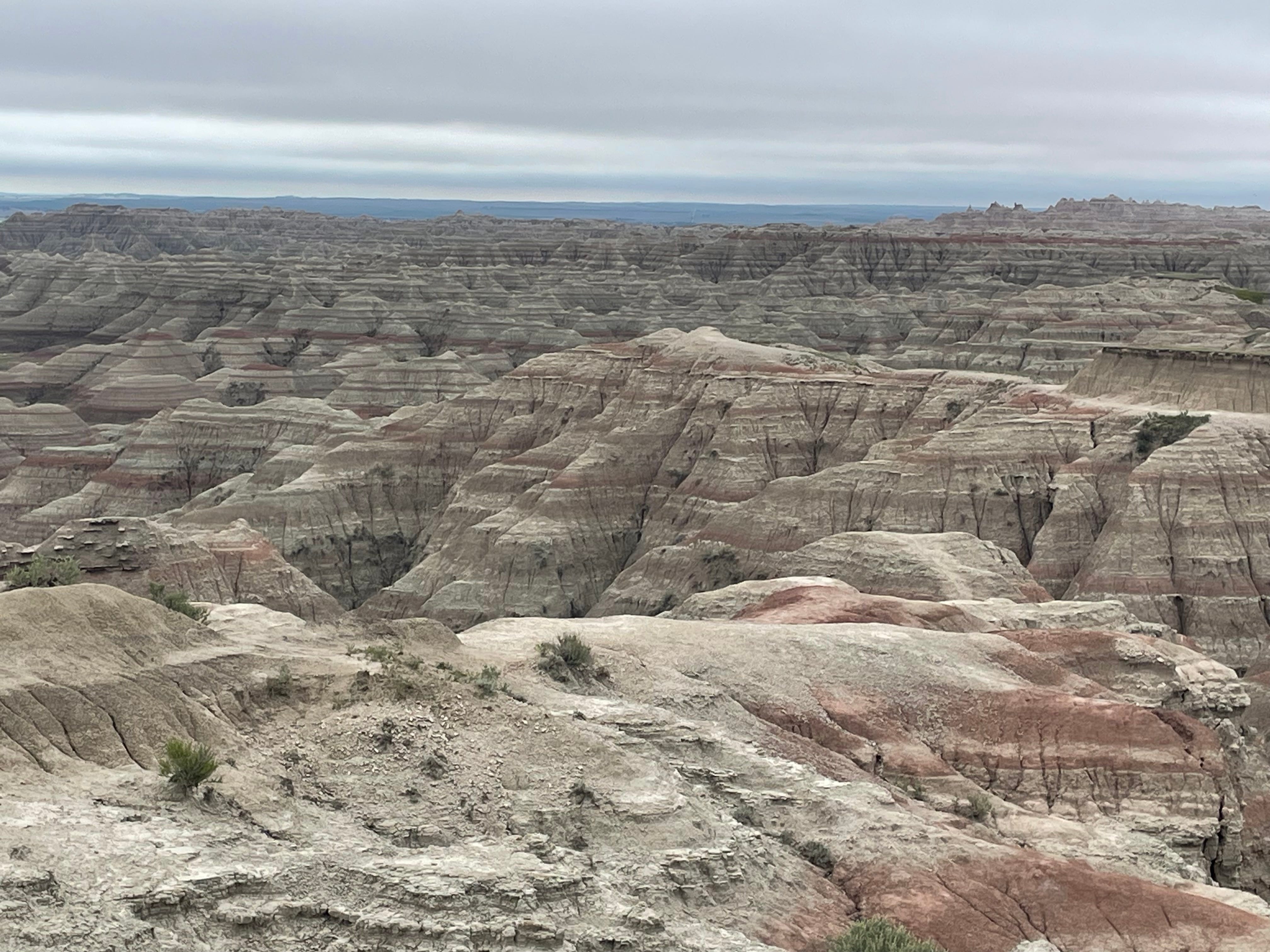
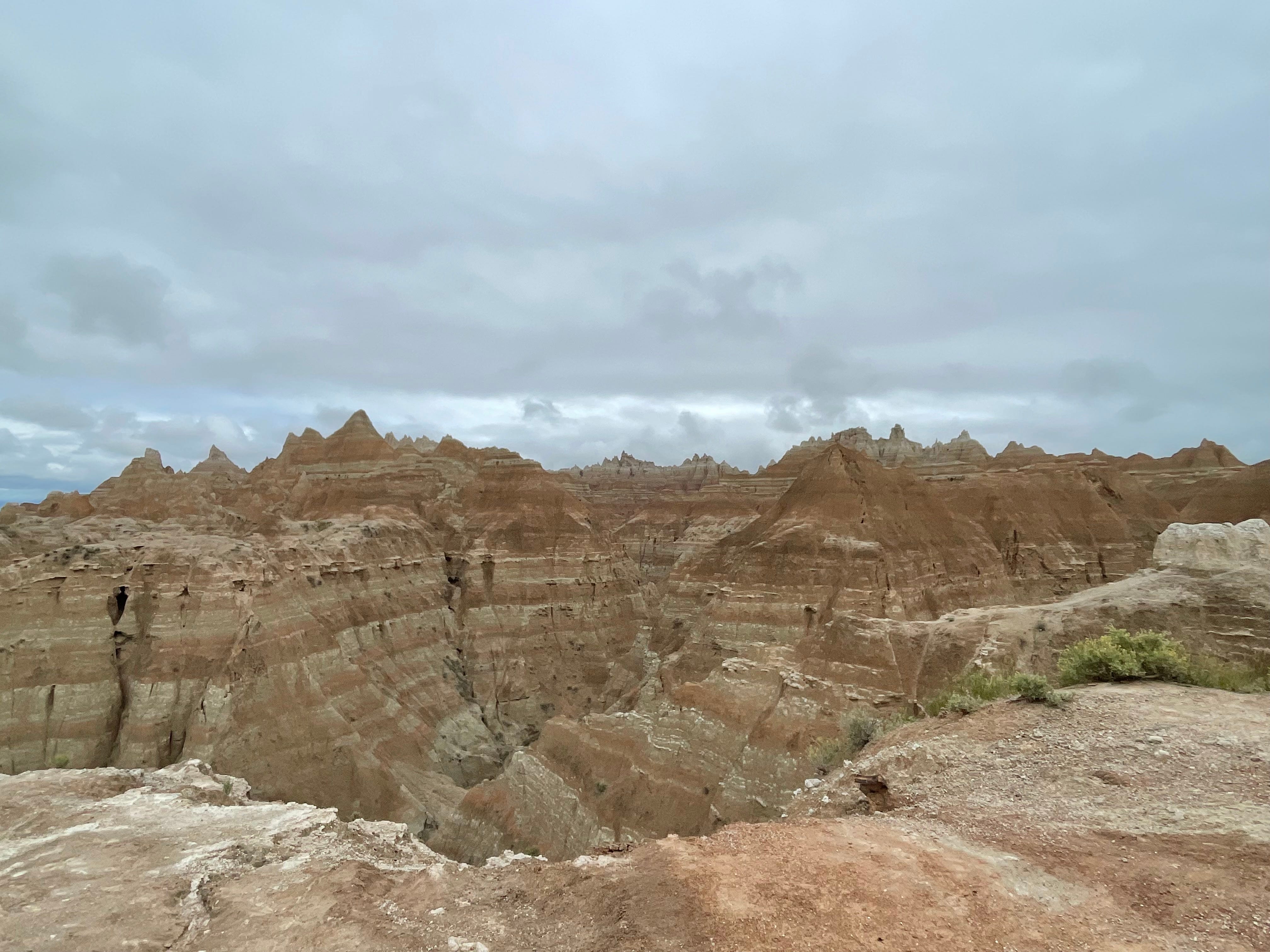
Travel is a great way to break open old patterns of perception, thinking and assumptions. Last month, I experienced this again in the Badlands, looking out on a foreign landscape that my Midwestern eyes saw as beautiful but barren. Accustomed to the greenery of the fields and forests sprawling across my homelands, I was awestruck by the dusty palette and the carved, expansive topography of the Badlands. It unfastened something inside me as the vast spaces before me were mirrored in my heart.
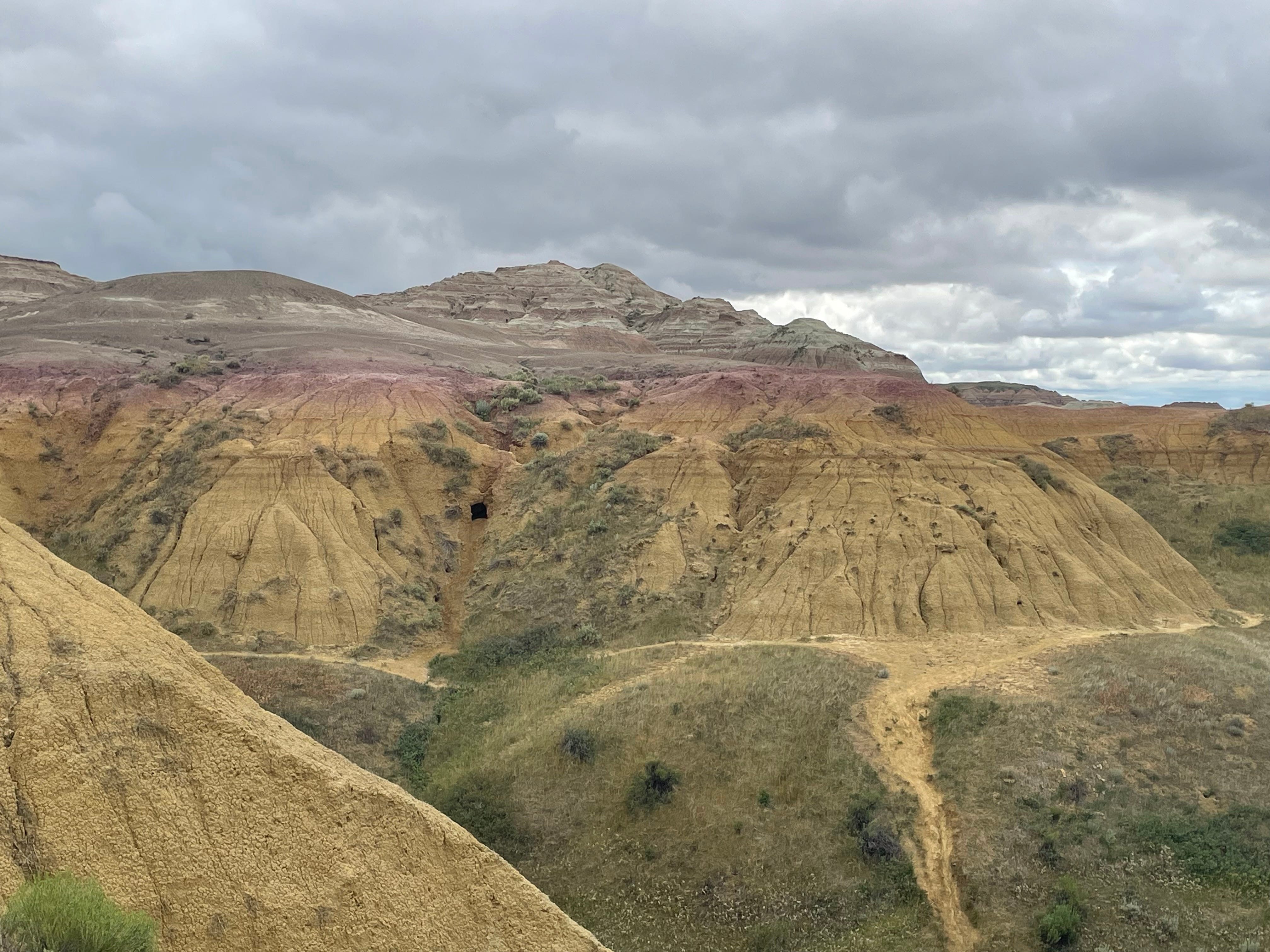
As rocks go, the Badlands are not very old — just 75 million years (compared to parts of the Rocky Mountains dating back 2 billion years). First formed as sediment and volcanic ash deposited in layers by ancient seas and rivers; then carved out by water and wind exposing not only a map of time charted in the layers but also a fossil record of now-extinct beings living there through its many changes. Mosasaurs and nimravid, oreodonts and brontotheres. I became a little dizzy thinking about how the striped landscape was a form of time travel, a revelatory view into the past.
And, then, at the next vista, I was astonished to see green again. The dry canyons were met at the top by a mixed-grass prairie spread out flat like a verdant blanket someone had pulled up just to the edge of the rocks.
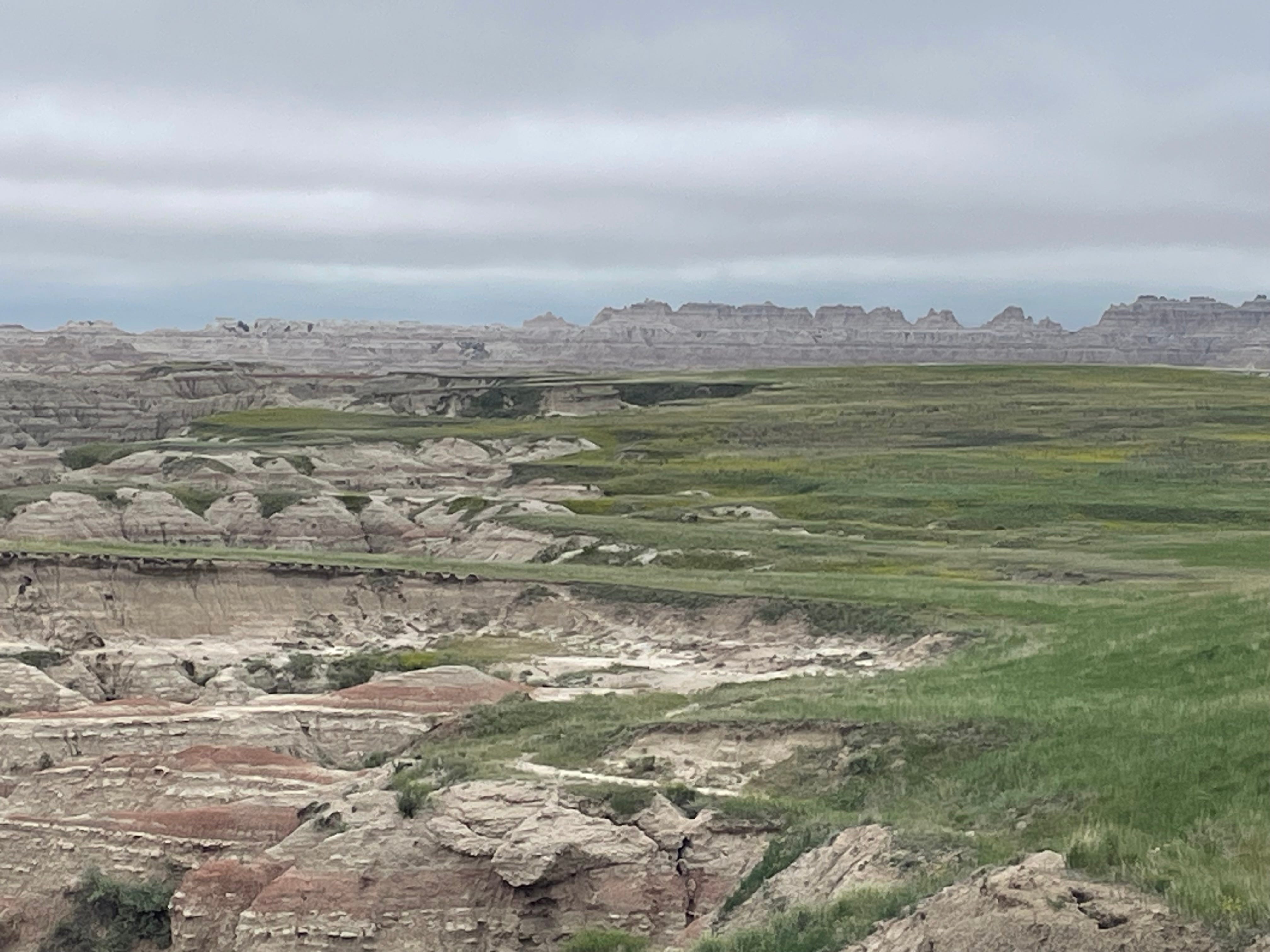
Now the foreign landscape was capped by grasslands I recognized from home. The strange and the familiar bumped into each other like a geographical yin-yang writ large in the land. I began to think of the canyons as a reminder of how much bedrock and story sits beneath the surface of what we know as home. How much unseen history lies beneath our feet, wherever we are. How every place and every day rests on a past that includes both flourishing and famine, slow erosion and catastrophic interruptions, stories known and unknown, all laid down in layers and sometimes worn away or etched with fossils silently reminding us we are not the first nor likely will we be the last.
So much of the seismic change we are now living through worldwide is the result of old habits, perspectives and ways of being layered beneath this day, seen or unseen. The lies of unsustainable consumption and inequities are now eroding before our eyes, and the bedrock assumptions on which our lifestyles have been built are increasingly exposed as barren and faulty.
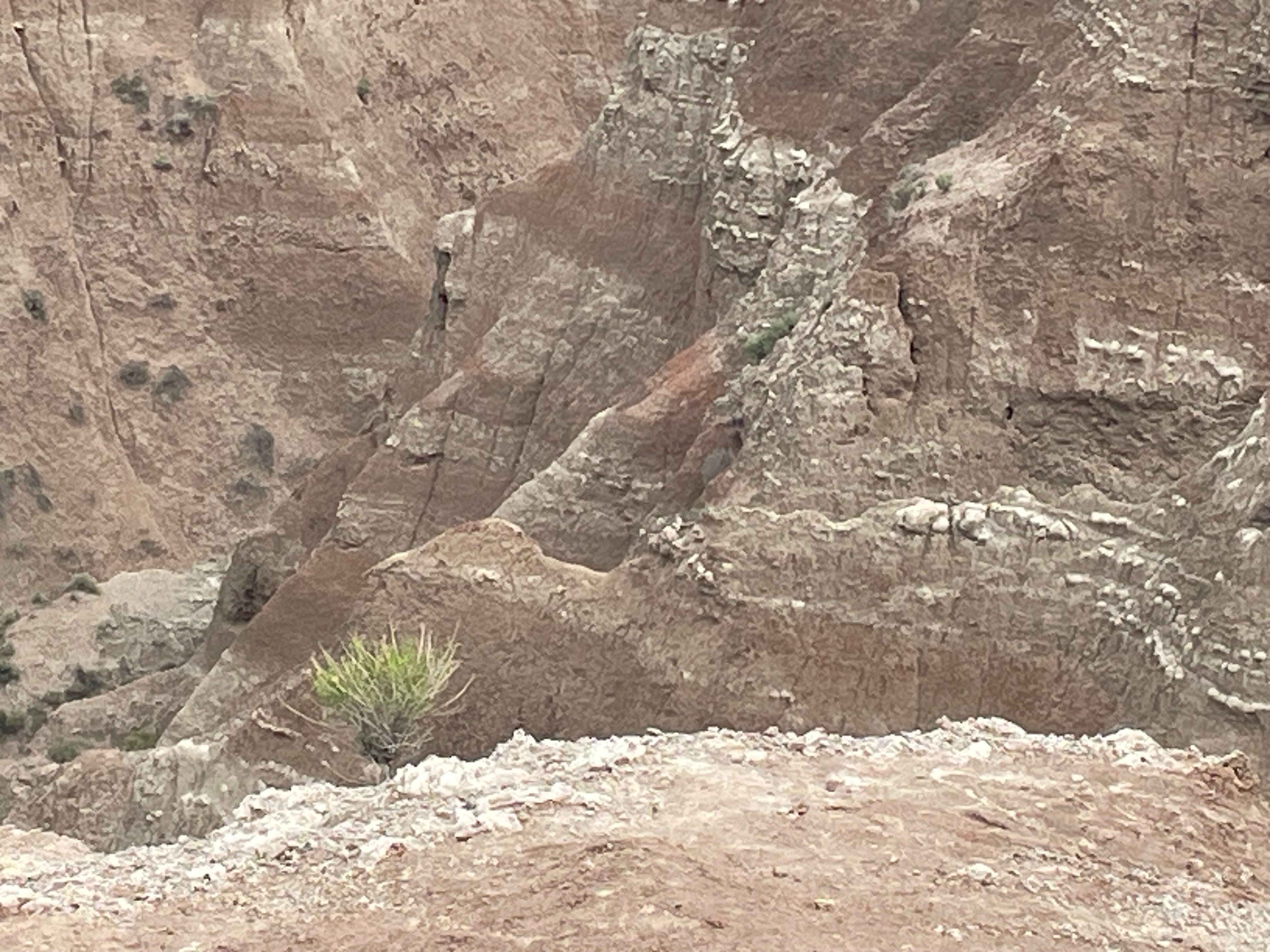
But the erosion of the Badlands is not just a matter of history. Like most change, it continues every day. Although the ancient rivers and seas no longer run through the canyons, wind and rain wear down this striking landscape at a rate of one inch per year, a rapid disappearance in the life of a rock. This means if I take a photo today of a rock formation as tall as I am, the rock will be reduced to nothing in 64 years. Every photo I took of the Badlands last month is a snapshot in time as fleeting as a human life.
On the way back, as we neared home, we drove through lush fields of corn and beets, of soybeans and wheat, and I wondered about what lies beneath them — in time and place. What fossil stories have been buried? Which are being excavated and told anew so that we might finally learn their wisdom? Which have been honored all along by those whose voices have been ignored or stifled, and how might those voices be amplified now? How do I go forward, day after day, honoring the layers in time and story, seen and unseen beneath my feet?
“Live in the layers, not on the litter,” comes the advice from Stanley Kunitz’ poem, “The Layers.” We are never done changing, he reminds us. We will do well to reconcile our hearts to their inevitable losses while cherishing every precious stone along the way.
I returned home with just one stone as my single keepsake from the trip. Not a stone from the Badlands, or the Black Hills, or the Rocky Mountains of Glacier National Park. It is a stone I picked up on our last day of travel, retrieving it as we walked across the headwaters of the Mississippi River that, farther south, flows through the Twin Cities I call home. It now sits on my desk as a quiet reminder of the bedrock always supporting our weight wherever we are and always, at various rates, wearing away, forever being changed by water and wind and time itself, while it too changes the landscape of home and beyond.
Wishing you all well in this and every season of continuing change.
Karen